 Name Tracing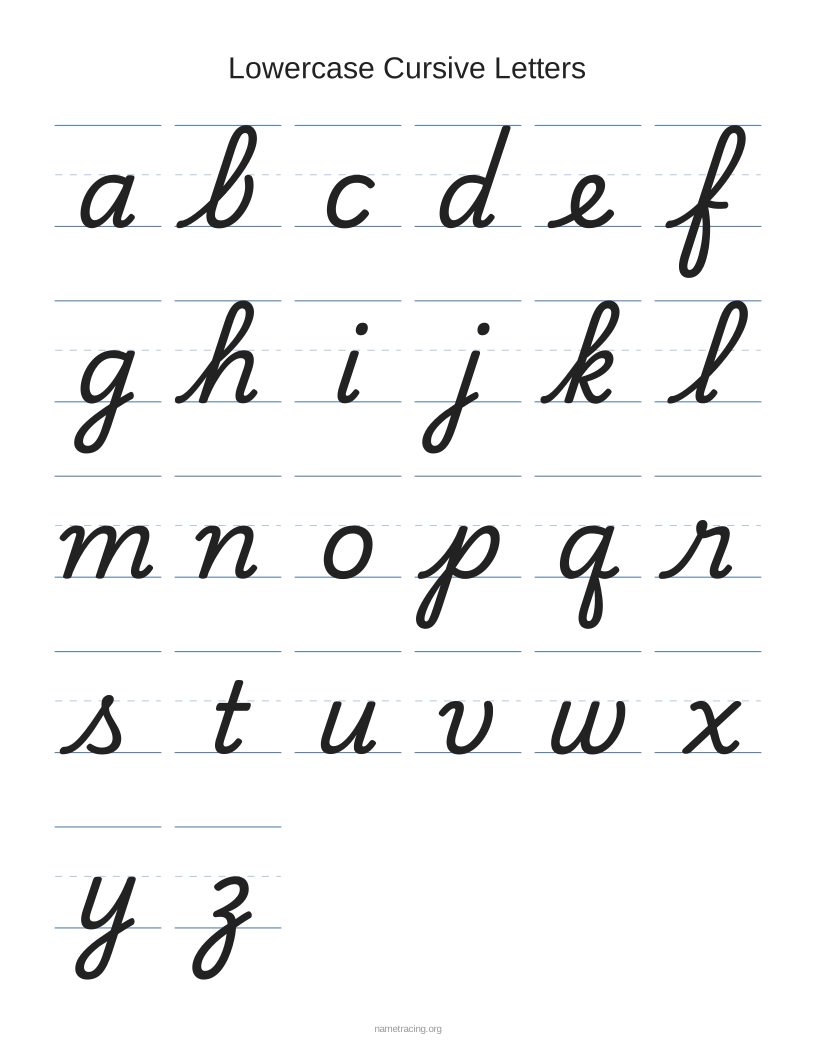
Teachers often group lowercase cursive letters by how they start: undercurve letters (i, t, u, w, r, s, p, j), loop letters (e, l, b, h, f, k), downcurve letters (a, d, g, o, c, q) and overcurve letters (n, m, y, x, v, z). Learning one group at a time makes the joins easier.
What it is good for
- Introducing cursive letter groups
- Daily cursive warm-ups
- Practicing connections between letters
- Cursive handwriting practice for adults
How to make and print it
- Type the name (or letters). For several children, put one name on each line.
- Choose print or cursive, gray or dotted tracing letters, and a line size that suits the child’s age.
- Click Download PDF and print at 100% / Actual size.
More tracing worksheets
Letter tracing A to Z
Cursive letters A to Z
Number tracing 1 to 20
Frequently asked questions
Which lowercase cursive letters are hardest?
Lowercase b, f, k, r, s and z look the least like their print versions, so they usually need extra practice.
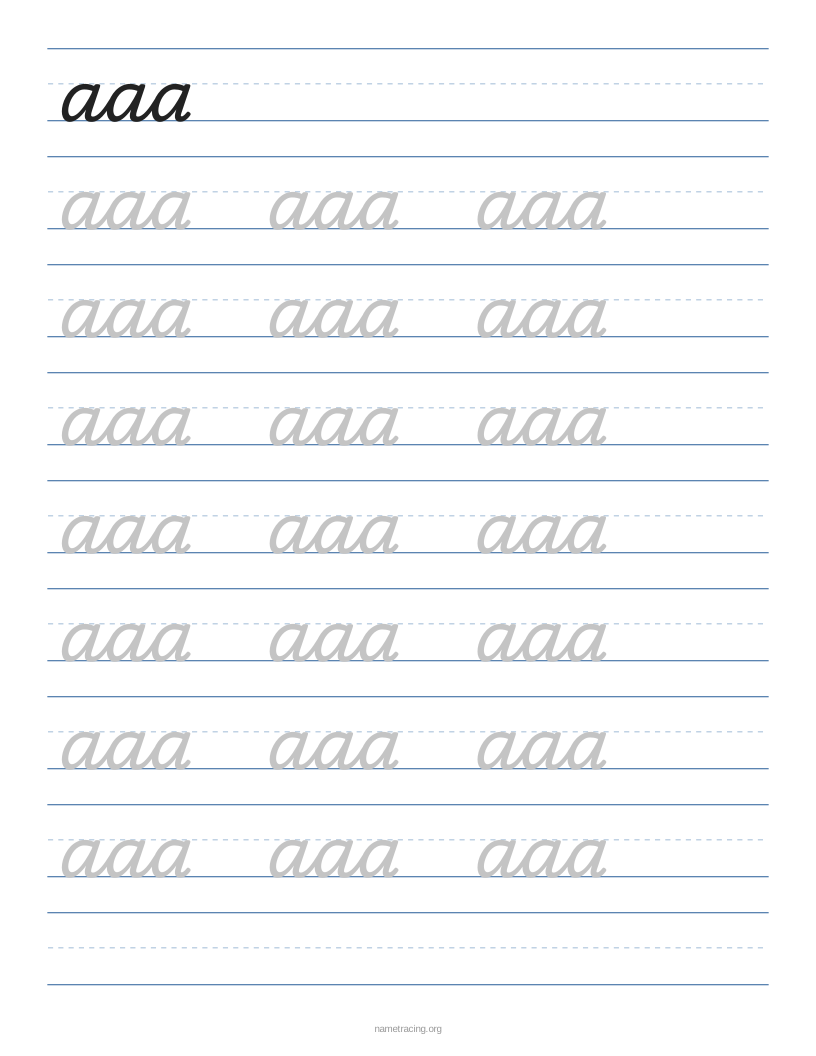
Why practice letters in threes, like "aaa"?
Writing a letter several times without lifting the pencil builds the joining stroke, which is what makes cursive fast.